Computational Fluid Dynamics (CFD) Simulation of Plasma Jet Gas Dynamics

Clinical Significance

The flow regime directly influences plasma morphology, which in turn affects the treatment process. Understanding how the device operates under different flow conditions is essential for:

  • Controlling plasma delivery to target tissue
  • Ensuring treatment precision and reproducibility
  • Optimizing therapeutic efficacy
  • Establishing safe operational parameters

Methodology

The simulations employ CFD techniques to model the interaction between helium plasma jet and atmospheric air, capturing the complex fluid dynamics that govern plasma behavior in clinical conditions.

Output

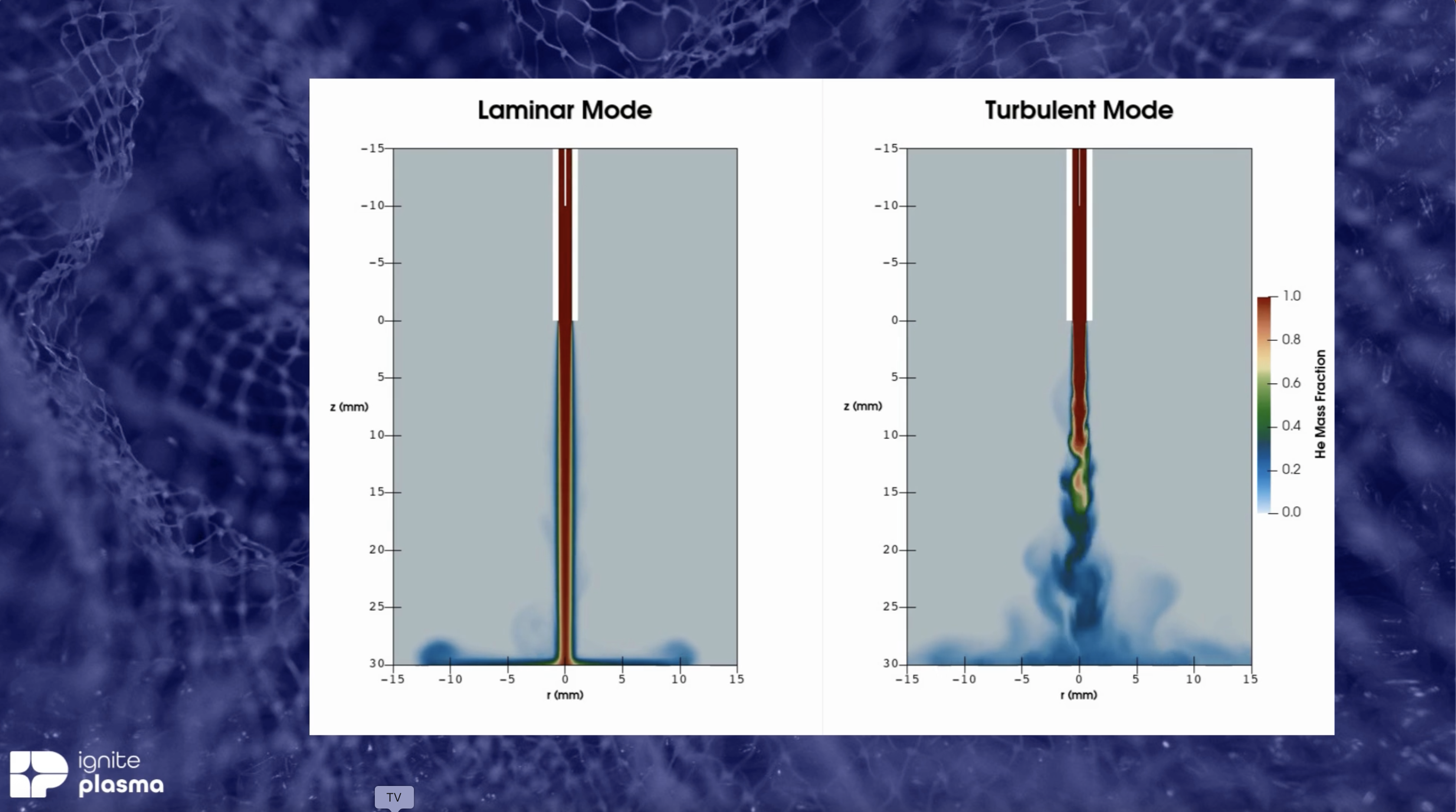
Video visualization demonstrating laminar and turbulent flow regimes of the helium plasma jet in atmospheric air.


📹 View the full Simulation in the Video below! 👇✨ 


Lead Institution: University of Cyprus (UCY)
Researchers: G. Vafakos & E. Karvelas
Type: Simulation Study & Video Visualization


Overview

Computational Fluid Dynamics (CFD) simulations have been developed to predict the gas dynamics of the IgnitePLASMA helium plasma jet operating in atmospheric air. This modelling work provides crucial insights into device behavior under different operational parameters, enabling optimization of the plasma-based surgical platform before clinical application.

Key Findings

The simulations investigated two distinct operational modes of the plasma jet:

Laminar Mode:

  • Occurs when the jet’s Reynolds number is below a critical threshold (lower flow rates)
  • Produces smooth, consistent fluid motion
  • Results in predictable jet behavior over time
  • Characterized by slower fluid velocity

Turbulent Mode:

  • Emerges when flow rate exceeds the threshold
  • Creates faster, more stochastic fluid motion
  • Exhibits less predictable temporal behavior
  • Shows greater variability in flow patterns
Clinical Significance

The flow regime directly influences plasma morphology, which in turn affects the treatment process. Understanding how the device operates under different flow conditions is essential for:

  • Controlling plasma delivery to target tissue
  • Ensuring treatment precision and reproducibility
  • Optimizing therapeutic efficacy
  • Establishing safe operational parameters

Methodology

The simulations employ CFD techniques to model the interaction between helium plasma jet and atmospheric air, capturing the complex fluid dynamics that govern plasma behavior in clinical conditions.

Output

Video visualization demonstrating laminar and turbulent flow regimes of the helium plasma jet in atmospheric air.


📹 View the full Simulation in the Video below! 👇✨